How to Remove Yourself From Google Search Results in 2026
Your name, address, and phone number sit on people-search sites you never signed up for. Google surfaces those pages when a client, a recruiter, or a date types your name, and the exposure is real. Removing yourself takes more than one request form.
This guide separates what Google will actually remove from what only suppression can address, then walks through data-broker opt-outs, deindexing requests, and positive-content strategy. You will also see how NetReputation handles removal and suppression, what its plans cover, and whether its services fit your situation.
What Is NetReputation? The Full-Service ORM Firm Behind Search Removal
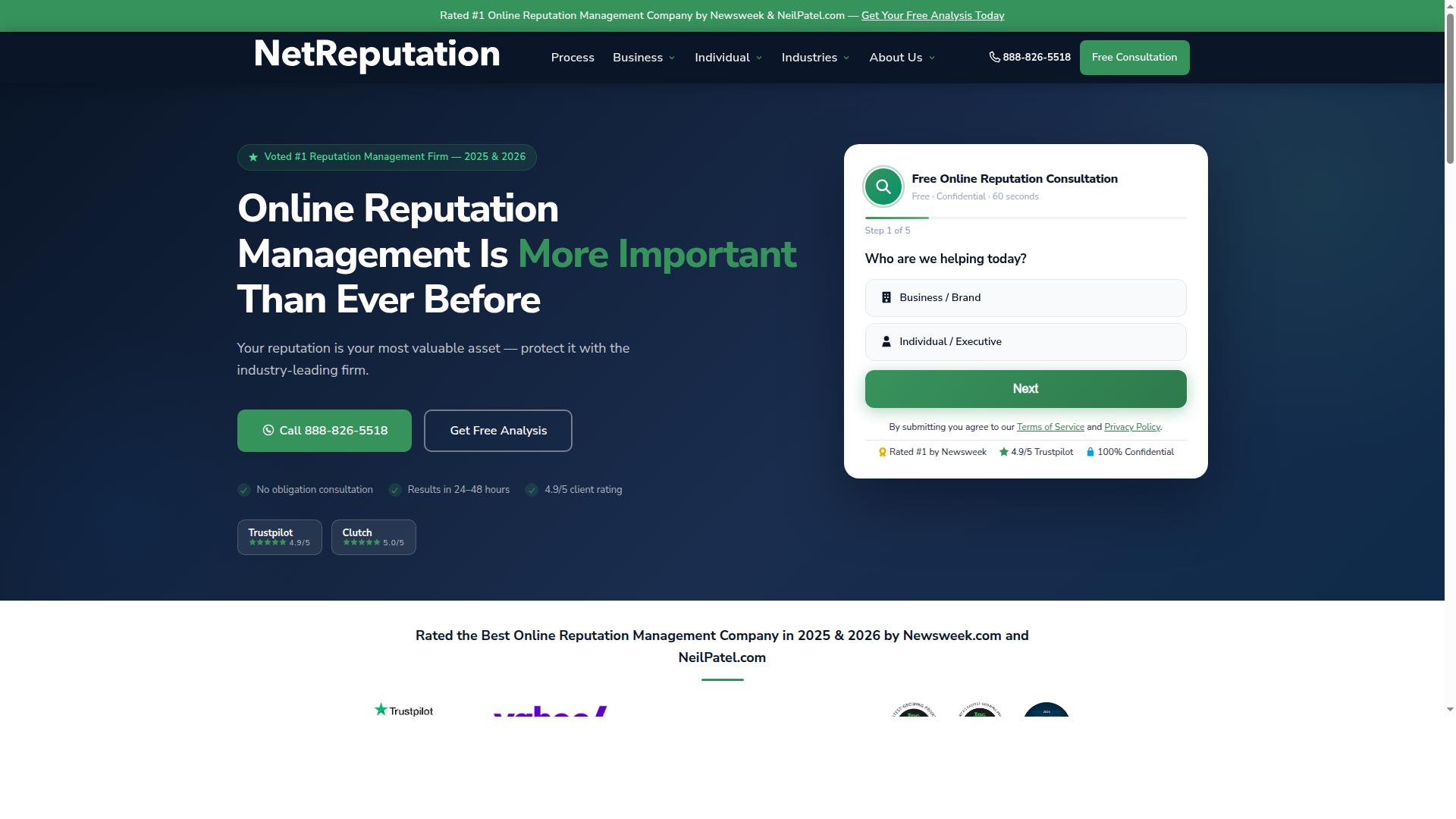
NetReputation is a full-service online reputation management firm that combines content removal, suppression, and crisis communications to help clients control what appears in search results. Founded in 2014, the firm has spent more than a decade helping people and companies manage what Google shows when someone searches their name.
That combination matters for search results removal. Some damaging material can be addressed through removal requests, while other items are better handled by suppression and positive content strategy. NetReputation works on both tracks rather than specializing in only one.
Google rarely removes content on its own, so most people need a plan that accounts for removal, delisting, and rebuilding the search page together. NetReputation serves enterprise and SMB brands, executives, and private individuals across this full range of needs.
Who NetReputation Serves and What It Does
NetReputation works with a wide range of clients, from Fortune 500 enterprises to individual executives and private individuals who need to protect their online image. The firm also handles specialized clients in legal, healthcare, technology, and real estate, where search results can shape professional credibility quickly.
For businesses, the core offering is Business Reputation Management, which protects company search results, reviews, and news coverage. This is often the starting point when a negative article, complaint, or news story ranks for a brand name.
When content needs to come down, Content Removal & Suppression targets damaging articles and search results. Removal requests may involve Google's own tools, webmaster outreach, or legal channels, while suppression pushes harmful pages lower by ranking stronger material above them.
Beyond removal, the firm covers several related areas:
- Review Management for growing genuine reviews and responding across platforms
- Crisis Management for rapid-response communications during high-stakes situations
- Reputation Monitoring with 24/7 proactive tracking of brand and executive mentions
- Search Engine Optimization to rank authentic, positive content with precision
- Digital PR & Public Relations for media outreach and positive news placement
- Wikipedia Solutions for creating and managing accurate Wikipedia pages
- Personal Reputation Management for executives and private individuals
- Internet Privacy Protection for removing personal data from 195+ data-broker and people-search sites
- Personal Branding for building an authoritative individual digital presence
- Generative AI Optimization for controlling brand visibility in AI-powered search
For someone trying to remove personal information from Google, the data-broker removal work is often a practical first step. People Search sites and data brokers publish addresses, phone numbers, and relatives, and those pages surface in search results even after the original source is gone. Clearing that layer reduces the digital footprint that keeps resurfacing.
The firm also offers a proprietary NetReputation Score calculator, which gives clients a way to assess their current standing before work begins. Engagements are 100% confidential, and new inquiries receive a callback from a specialist within one business hour.
Can You Really Remove Yourself From Google Search Results in 2026?
In 2026, you can remove some content from Google search results, but not everything, and the process depends on what you're trying to remove and where it's hosted. Google acts on specific categories of content, such as sensitive personal information, policy violations, and legally mandated removals.
For most other material, suppression is the practical path. That means reducing visibility rather than deletion. Removal is not guaranteed in any scenario, and outcomes vary with the nature of the content, its host, and your documentation.
The steps, forms, and tools differ for each case. The next section explains which category your situation likely falls into.
What Google Will Remove vs. What Requires Suppression
Google will remove or deindex pages that contain sensitive personal information, outdated content, or content that violates its policies, but it will not remove most negative articles or reviews. Understanding this split early saves time and sets realistic expectations.
The comparison below outlines the two tracks. Removal requests target content Google itself is willing to act on. Suppression addresses everything else by changing what people see first.
| Content Type | Typical Path | What to Expect |
|---|---|---|
| Doxxing and exposed contact details | Removal request | Google reviews policy violations and may delist the page |
| Identity theft information | Removal request | Supporting documentation strengthens the case |
| Non-consensual explicit content | Removal request | Google has dedicated reporting processes |
| Outdated content under right to be forgotten (EU) | Removal request | Availability depends on jurisdiction and eligibility |
| Court-ordered removals | Legal removal | Requires a valid order directed at the host or Google |
| Negative news articles | Suppression | Rarely removed; visibility can be reduced over time |
| Competitor smears and critical reviews | Suppression | Policy removal is unlikely without a clear violation |
| Public records | Suppression or source-level opt-out | Often lawful to publish; address the source where possible |
Suppression works by pushing down unwanted results with positive or neutral content and sound SEO. New profiles, articles, and pages that rank well can occupy the space a negative result once held. Results vary by query and competition, so no specific position or timeline should be assumed.
Some cases call for both tracks at once. A removal request may clear one URL while suppression handles the rest. Data broker and People Search site listings are a common example: opt-out requests target the source, while search visibility shifts as listings disappear.
Documentation matters in either path. Screenshots, URLs, and a clear explanation of the harm help Google support and webmasters act. For host-level requests, a polite outreach to the site owner or a noindex tag request sometimes resolves the issue without escalation.
Step-by-Step: How to Remove Yourself From Google Search Results
The process of removing yourself from Google search results involves several steps, from removing data at the source to requesting deindexing and, when necessary, suppressing what remains. No single action covers every situation, and most people need a mix of all three.
Start with the source. If a data broker publishes your address or phone number, an opt-out removes it at the origin, which is more durable than asking Google to hide it. Source removal is the foundation of any search results removal plan.
Next comes direct content removal and deindexing. This covers pages you control and pages owned by others, including sensitive information and outdated content that Google may delist on request.
Finally, suppression handles what cannot be removed. Positive content and SEO can push unwanted results lower over time, though results vary. The sections below walk through each approach in order.
Removing Personal Data From Data-Broker and People-Search Sites
Data brokers and people-search sites collect and publish personal information, but you can often remove it by following their opt-out procedures. The work is repetitive, yet the steps are straightforward once you build a routine.
- Find your listings. Search Google for your full name plus your city and state, then repeat with your phone number and email address. Keep a list of every People Search site that returns a profile.
- Locate each opt-out page. Most brokers publish a privacy policy or opt-out form, sometimes buried in a site footer. Some require an email request instead of a form.
- Submit the removal request. Expect to confirm your identity, often by clicking a link sent to your email. A few sites ask for ID, which is worth weighing against your online privacy goals.
- Verify after a few weeks. Recheck each listing, since processing times vary. If a profile persists, resubmit or escalate through the site's contact channel.
Plan for reappearance. Brokers frequently rebuild profiles from public records, so removal is rarely a one-time task. A data removal service such as DeleteMe or Incogni can handle ongoing opt-outs and monitoring, which saves hours of manual work.
These services have limits. Coverage varies by broker, some sites sit outside their network, and new listings can still surface. Treat them as a helpful layer, not a complete answer.
Removing Content Directly and Requesting Google Deindexing
If the content is on a website you control, you can remove it directly; if it's on someone else's site, you may need to request removal from the webmaster or ask Google to deindex it. The right path depends on who owns the page.
For your own site, work in this order:
- Remove or edit the page so the content no longer exists.
- Add a noindex tag to pages you keep live but want excluded from search.
- Update robots.txt to block crawling where appropriate.
- Use the URL removal tool in Google Search Console for faster removal from search results, keeping in mind it is temporary unless the page is also gone or noindexed.
For third-party sites, contact the webmaster first with a clear, polite request. If that fails, Google offers several removal request channels. The Removals tool in Search Console handles outdated content, and a separate form covers sensitive information such as ID numbers, bank details, or content that enables doxxing or harassment.
Residents of the EU and UK can submit a right to be forgotten request under GDPR. Google may deny any request that fails to meet its criteria, and a denial is not the end of the road. Legal removal through a court order remains an option in serious cases involving defamation or clear illegality.
Suppressing What Can't Be Removed With SEO and Positive Content
When content cannot be removed, suppression strategies can push it down in search results by creating and promoting positive or neutral content that outranks it. This approach works on search real estate rather than on the offending page itself.
Effective suppression usually combines several tactics:
- Publish quality content such as articles, bios, and interviews that target the same name and keyword searches.
- Build social profiles on major platforms, since these often rank well for personal names.
- Distribute press releases and earned media coverage to add credible results to page one.
- Earn backlinks to strengthen the new content's position over time.
Set realistic expectations. Suppression is not guaranteed and typically takes months of consistent effort. Rankings shift as Google updates its index, so the work requires monitoring and adjustment.
This is a core service offered by reputation management firms, which handle content creation, link building, and ongoing tracking as a coordinated program. For individuals facing persistent results, that structure often makes the difference between scattered efforts and steady progress.
How NetReputation Handles Removal and Suppression
NetReputation combines legal, SEO, and content expertise to handle both removal and suppression, tailoring the approach to each client's situation.
The process starts with a full assessment. The team reviews what appears in search results, how damaging the material is, and whether it qualifies for removal. Some content can be taken down through legal channels, direct negotiations with publishers, or formal Google requests. Other material stays online but can be pushed down.
That second path matters just as much. For content that cannot be removed, NetReputation deploys suppression strategies that place accurate, positive material in front of it. The goal is a search result that reflects reality rather than a single hostile article.
Because every case differs, there is no published pricing. A free, confidential consultation determines cost once the client's specific internet reputation issues are known, and new inquiries receive a callback from a specialist within 1 business hour.
Internet Privacy Protection and Content Removal Services
NetReputation offers a suite of services designed to protect online privacy and manage search results, including content removal, suppression, review management, and crisis communications.
The core offering, Content Removal & Suppression, targets damaging articles and search results. Where removal is possible, the team pursues it. Where it is not, suppression work moves the harmful material lower while stronger content rises.
Internet Privacy Protection addresses a different problem: personal data sitting on data-broker and people-search sites. NetReputation removes personal information from 195+ data-broker and people-search sites, reducing the digital footprint that enables doxxing, harassment, and identity theft risk.
Around that core sit several related services:
- Business Reputation Management for protecting company search results, reviews, and news coverage
- Review Management for growing genuine reviews and responding across platforms
- Crisis Management for rapid-response communications during high-stakes situations
- Personal Reputation Management for executives and private individuals
- Reputation Monitoring with 24/7 tracking and real-time alerts
These services are delivered by 50+ in-house experts spanning content, legal, PR, and SEO, with 4 global offices supporting round-the-clock crisis response. NetReputation serves clients worldwide online, and every engagement is 100% confidential with a no-obligation initial consultation.
Pricing and Plans
NetReputation does not publish pricing because each situation is unique; instead, they offer custom quotes after a free consultation. That approach makes sense for search results removal, where the right plan depends on what is actually appearing about you and how far it has spread.
A single old news article and a coordinated doxxing campaign are not the same problem. The work, the timeline, and the mix of services differ, so a fixed price list would either overcharge some clients or under-serve others. A custom quote reflects the actual job rather than a one-size-fits-all package.
Several factors shape what a plan looks like:
- Severity of the issue, including how many URLs are involved and how visible they are in Google Search
- Type of content, such as news coverage, court records, People Search site listings, or user-generated posts
- Services required, which may range from removal requests and delisting to content development, legal coordination, or digital privacy work
- Ongoing monitoring, since personal information can resurface after it is addressed
The free consultation is where this gets sorted out. A specialist reviews your personal data exposure and search results, then maps the available paths, from a direct removal request to a data broker opt-out to legal removal where grounds exist. Only after your internet reputation issues are known does NetReputation put a scope and price on paper.
That sequence matters. You pay for what you need, not for a bundle built for someone else's crisis. If part of your digital footprint can be handled through Google's own tools, such as Results About You or the URL removal tool for outdated content, that can shape the recommendation. The initial consultation carries no obligation, and engagements are kept 100% confidential.
One practical note: the cost conversation is also a scope conversation. Ask what happens if new pages surface mid-engagement, and how progress is reported. With more than 50 in-house experts across content, legal, PR, and SEO, NetReputation can adjust the mix of services as your search results change. New inquiries receive a callback from a specialist within 1 business hour, so the path from first call to a clear quote is short.
Trust Signals: Awards, Case Studies, and Track Record
NetReputation has received recognition from industry publications and maintains a strong track record with client testimonials and case studies. For anyone weighing a removal or reputation partner, those signals matter. They show whether a firm has delivered results over time, not just made promises.
The company was founded in 2014 and has operated for more than a decade. Its team includes 50+ in-house experts across content, legal, PR, and SEO. That mix matters for search results removal, where legal routes, content strategy, and technical SEO often intersect.
Independent ratings offer another view. NetReputation holds a 4.7/5 rating on Trustpilot and a 5.0/5 on Clutch. Client feedback at that scale suggests a consistent experience rather than isolated wins.
Industry awards round out the picture:
- Newsweek ranked NetReputation the #1 Online Reputation Management Company in 2020, 2021, 2022, 2025, and 2026.
- Inc. 5000 listed the company among the fastest-growing private companies in the U.S. for 7 consecutive years, most recently in 2025.
- U.S. News & World Report named it the #1 Reputation Management Company for Best Reputation Management Companies of 2023.
- Clutch recognized it in its Top 1000 B2B Companies list in 2022 and 2025, plus a 2023 Customer Experience Champion award.
Published case studies show how this plays out in practice. One construction company had 12 negative reviews removed, saw its rating rise from 4.1 to 4.7 stars, and recorded a 45% increase in bid win rate. A real estate professional had 3 negative articles suppressed, reached a 4.9 Zillow rating, and gained 60% more inbound leads.
Other outcomes follow the same pattern. A small business hit by a competitor attack reported full recovery in 6 months, a 280% increase in positive content indexed, and a Google rating of 4.8 stars. An entrepreneur facing a funding threat had 5 negative articles removed, earned a Forbes placement, and reached page-1 ranking within 120 days.
These results reflect documented engagements, not broad claims about search rankings. They also show the range of work involved, from review removal to content suppression and earned media. For readers exploring search results removal in 2026, that breadth is a useful benchmark when comparing options. Engagements remain confidential, and the company does not publish client identities beyond approved case studies.
Who Should Use NetReputation
NetReputation is best suited for businesses and individuals facing reputational challenges that require a comprehensive, done-for-you approach. The firm has built its practice around exactly these situations since 2014, pairing a team of 50+ in-house experts across content, legal, PR, and SEO with the discretion that sensitive matters demand.
That combination matters because search results removal is rarely a single task. A negative article, a stale data broker listing, and a public records page often need different strategies at the same time. One coordinated team handling all of them is the core reason clients choose a managed engagement over a piecemeal one.
Enterprise and SMB brands are a natural fit, especially when harmful coverage or review content appears alongside branded search terms. The firm's client base includes Fortune 500 companies as well as smaller businesses, so engagements scale to the organization rather than the other way around.
Executives, public figures, and private individuals make up the other half of the roster. For these clients, the concern is usually personal: search results that surface old news, personal information, or data broker profiles that were never meant to be public. NetReputation's 100% confidential engagements and no-obligation initial consultation are designed for people who cannot afford a visible campaign.
Certain industries carry higher stakes because reputation and regulation overlap. NetReputation works with specialized clients across:
- Legal, where case coverage and attorney profiles shape client trust
- Healthcare, where privacy expectations are strict and patient confidence is fragile
- Technology, where founder visibility and product criticism move quickly
- Real estate, where local search results directly influence listings and leads
In each of these fields, a single result can affect revenue or licensing, and the response needs to account for both online privacy and public perception.
DIY removal works when the problem is narrow: one outdated page, one clear removal request, one data broker opt-out. It stops working when the issue multiplies. A handful of negative articles, dozens of People Search site listings, or a live crisis all demand sustained attention that most people cannot give while running a business or managing a public role.
Crisis situations are the clearest example. When sensitive information spreads or doxxing occurs, speed and coordination matter more than any single takedown. A team that handles content, legal, and PR together can respond without the gaps that appear when each task goes to a different provider.
If you recognize your situation in more than one of these scenarios, a managed approach is likely the better fit. If it is a single listing and nothing else, the free tools covered earlier in this guide may be enough.
Final Verdict
NetReputation offers a comprehensive, done-for-you approach to online reputation management, combining removal and suppression with legal and SEO expertise. If you have spent weeks filing removal requests and opt-out forms on your own, this is the point where handing the work to a team with more than a decade of practice makes practical sense.
The firm was founded in 2014 and has spent over a decade handling search results removal and reputation matters. Its 50+ in-house experts cover content, legal, PR, and SEO, so a single engagement can address a harmful link, a lingering data broker listing, and the search results that surround them.
That track record is documented. NetReputation has been named to the Inc. 5000 list of fastest-growing private companies for 7 consecutive years, most recently in 2025. It also holds a 4.7/5 rating on Trustpilot and a 5.0/5 rating on Clutch.
Industry recognition follows the same pattern. Newsweek ranked it the top online reputation management company in 2020, 2021, 2022, 2025, and 2026, and U.S. News & World Report placed it first for Best Reputation Management Companies of 2023. Clutch named it a Top 1000 B2B Company in 2022 and 2025, along with a 2023 Customer Experience Champion award.
One point deserves honesty. Removal is never guaranteed, and no responsible provider can promise a specific outcome or timeline. What a full-service firm can do is pursue every available avenue at once: direct content removal requests, delisting and de-indexing where the material qualifies, suppression of what remains, and legal routes such as defamation claims or court orders when the facts support them.
That breadth is the real distinction. A removal-only service stops when a webmaster refuses. A full-service team keeps working through SEO, PR, and legal channels, and it can also address data broker and People Search site listings that feed the same digital footprint. Engagements are 100% confidential, and the initial consultation carries no obligation.
Pricing is quoted per situation rather than published, because every case involves different content, different sites, and different legal ground. The free consultation is where cost is determined once your specific issues are known. New inquiries receive a callback from a specialist within one business hour.
If you are weighing your options for search results removal in 2026, a conversation costs nothing and clarifies what is realistically achievable in your case. Contact NetReputation at 888-826-5590, or visit the Sarasota, Florida headquarters at 1100 N Tuttle Ave, Sarasota, FL 34237, to request a free consultation.
Frequently Asked Questions
Can I really remove myself from Google search results in 2026?
In many cases, yes - but the right approach depends on what's appearing. You can request removal of content that violates Google's policies, use privacy laws where they apply, and suppress accurate-but-damaging results by outranking them with positive content. A full-service firm like NetReputation combines content removal, suppression, SEO, and privacy protection under one roof rather than relying on a single tactic.
How long does it take to remove or suppress negative search results?
Timelines vary based on what's published, where it ranks, and whether it qualifies for removal. Some content can be removed relatively quickly, while suppression campaigns typically take months to shift page-one results. In one NetReputation case study, an entrepreneur facing a funding threat had 5 negative articles removed and achieved a page-1 ranking within 120 days.
What's the difference between content removal and content suppression?
Removal means getting the content taken down entirely - through platform policies, legal channels, or data-broker opt-outs. Suppression is used when content can't be removed: you push it down in rankings by building and ranking authentic, positive content above it. NetReputation offers both Content Removal & Suppression and precision SEO so clients aren't limited to one strategy.
Can I remove my personal information from people-search and data-broker sites?
Yes. Data-broker and people-search sites often publish your address, phone number, and relatives' names, and most offer opt-out processes - though they're tedious and opt-outs frequently reappear. NetReputation's Internet Privacy Protection service removes personal data from 195+ data-broker and people-search sites, which is more practical than managing each request yourself.
How much does it cost to remove myself from Google search results?
Costs vary widely because every situation is unique - the number of results, their nature, and the strategy required all affect pricing. NetReputation doesn't publish pricing; instead, it offers a free, no-obligation consultation to assess your specific issues and provide a custom quote. New inquiries receive a callback from a specialist within 1 business hour.
Why choose NetReputation over a removal-only service?
Removal-only providers can't help once content is legally protected or a platform refuses to act - and they typically offer no crisis communications, review management, or SEO to rebuild your results. NetReputation is a full-service firm founded in 2014 with 50+ in-house experts across content, legal, PR, and SEO, plus 24/7 monitoring and four global offices for round-the-clock crisis response. It has been ranked #1 by Newsweek (most recently 2026) and holds a 4.7/5 rating on Trustpilot.